Neptune - AI-Powered Second Brain
Full-Stack Developer, AI DeveloperApril 2026 - June 2026
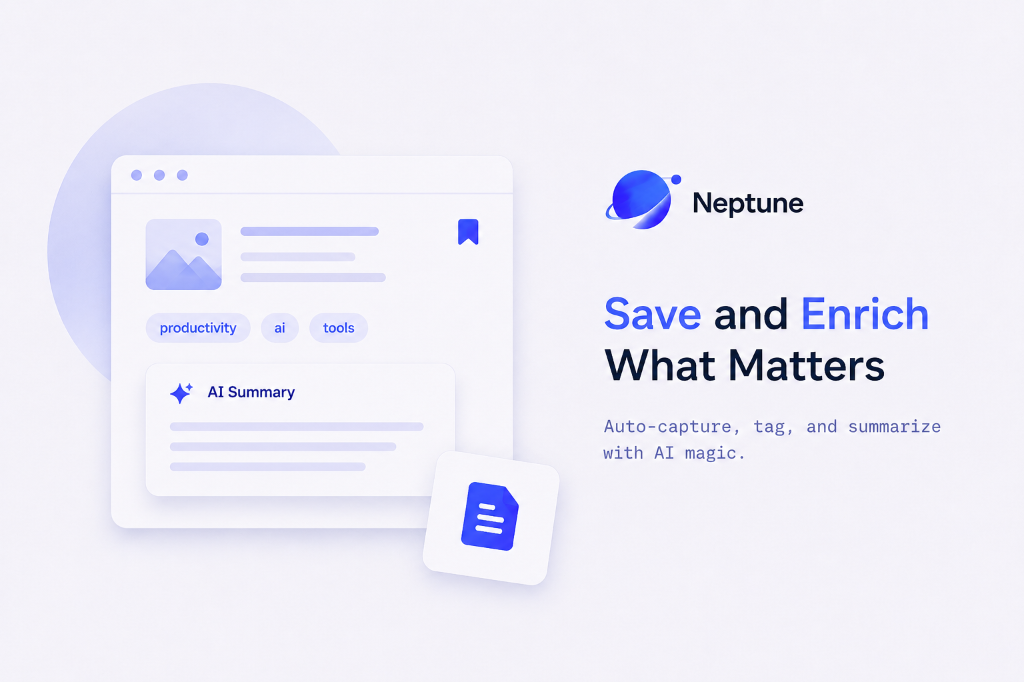
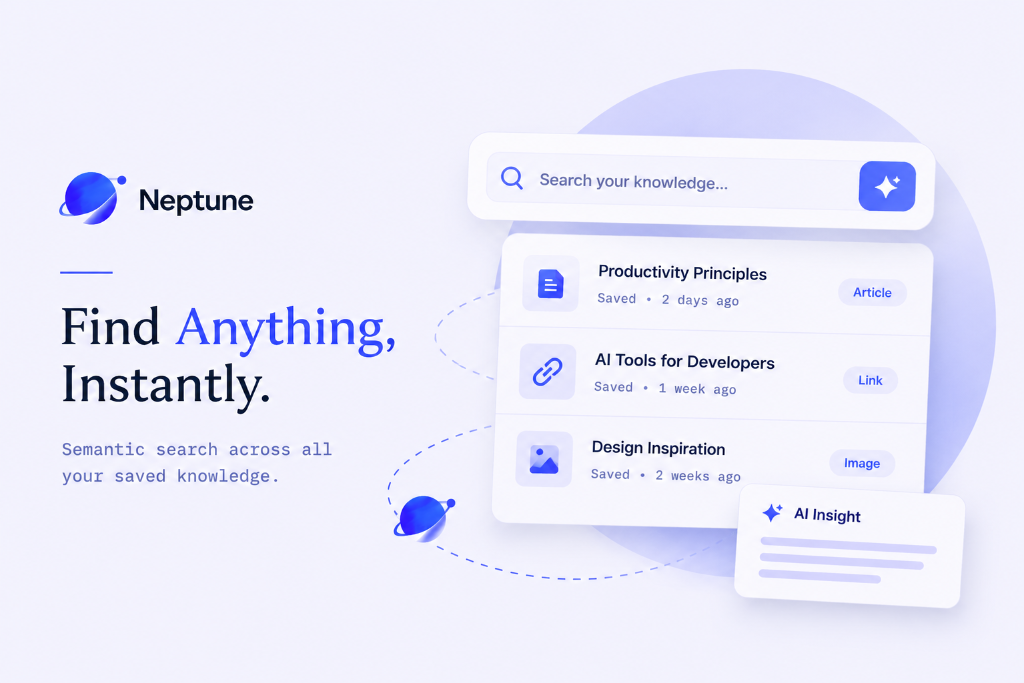
Neptune - AI-Powered Second Brain:An intelligent bookmarking and knowledge management platform with semantic vector search, AI web scraping, and conversational chat.Built a monorepo architecture with Turborepo managing 3 independent workspaces: React frontend (Vite), Express API server, and Hono AI microservice Implemented user authentication with JWT, OAuth middleware, and secure password management using bcryptjs Created full CRUD operations for bookmarks with rich metadata: title, description, categories, and taggable content Designed PostgreSQL schema with pgvector integration for semantic vector embeddings (768-dimension vectors) Implemented HNSW vector indexes for fast similarity search on saved content using cosine distance Built 'Magic Fill' feature that automatically extracts and enriches URLs with title, description, and tags using Cheerio web scraping Integrated LangChain orchestration for multi-LLM support (Google GenAI and Groq) with intelligent prompt chains Implemented AI chat interface allowing users to ask natural language questions about their saved knowledge base Developed public share links for individual bookmarks and user profiles with secure hash-based access Set up CORS, helmet security headers, rate limiting, and request ID middleware for production-ready API Created reusable packages: @repo/database (Drizzle schemas), @repo/validation (Zod schemas), @repo/ui (React components), @repo/libs (utilities) Configured Docker containerization for all services with multi-stage builds and environment isolation Set up GitHub Actions CI/CD workflows for automated testing and deployment to Vercel Used TanStack Query for efficient server state management and Redux Toolkit for client state
Services:
TypeScriptReactViteExpressHonoPostgreSQLDrizzle ORMLangChainGemini AIGroqTailwind CSSRedux ToolkitBunDockerTurborepoNextAuth
Challenges:
The main challenge was designing an efficient semantic search system with pgvector while keeping embeddings fresh and relevant. Required careful indexing strategy (HNSW), dimensionality choices (768-dim), and distance metrics (cosine). Additionally, orchestrating multiple LLMs (Google GenAI + Groq) with fallback strategies and managing async web scraping at scale demanded robust error handling and rate limiting.
What I learned:
- Vector database design and optimization with pgvector and HNSW indexes
- Building microservices architecture with Hono for specialized AI operations
- Full-stack TypeScript development with type-safe database layer via Drizzle ORM
- LangChain integration for prompt engineering and LLM orchestration
- Monorepo management with Turborepo and Bun workspaces for code sharing
- Web scraping techniques with Cheerio for metadata extraction
- Semantic search implementation using embedding-based similarity matching
- Production-grade API security with CORS, rate limiting, and JWT authentication
- Docker containerization and CI/CD pipeline setup with GitHub Actions